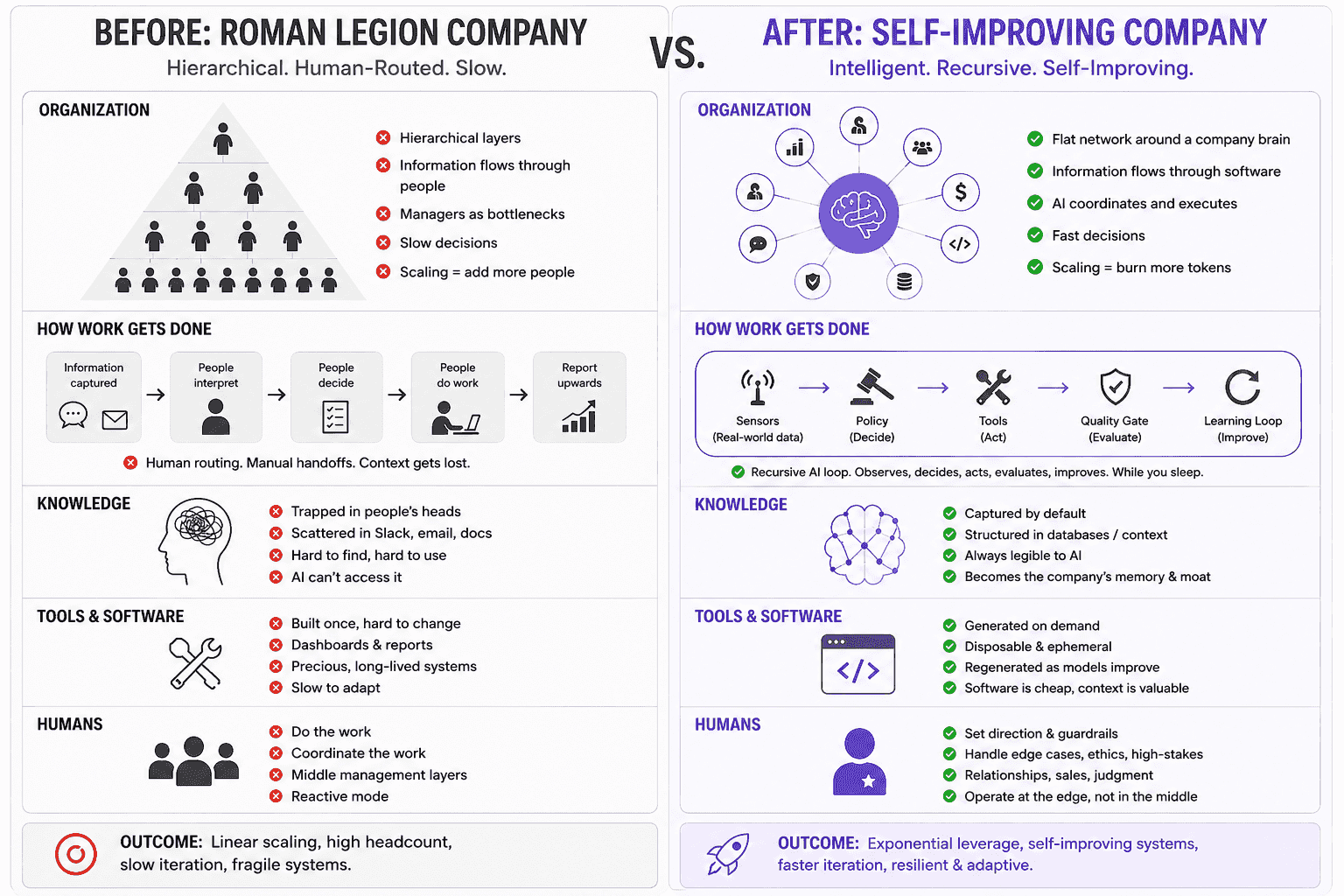
For a long time, help lived in its own corner: a bubble in the bottom right, a help center on another domain, a ticket form. The product was on one side, support was on the other, and the user had to travel between the two. That gap is now closing, and it is happening in three waves.
Wave 1: the agent that answers
The first wave was the assistant able to answer questions from a knowledge base. You feed it your help center, it retrieves the right article, and it replies in the chat. Intercom Fin is the textbook example: it resolves conversations from help content and routes the harder cases to a human.
This already removes a lot of repetitive load. But the agent still only talks. It tells you what to do, then leaves you to go and do it yourself.
Wave 2: the agent that acts
The second wave is agents that take real actions on the backend. Decagon and Sierra connect to your systems through APIs and execute workflows: a refund through Stripe, a subscription change, an account update, an identity check. The agent no longer says "here is how to get a refund", it processes the refund.
This is a real step up. But notice where it still lives: a chat bubble that triggers a backend call. The conversation acts on your data, yet the interface around it does not move.
Wave 3: the agent that operates the product
The third wave is the one that changes the most, and it is the one fewer people talk about. The agent operates the product frontend itself. The interface becomes part of the conversation.
Concretely, an agent like this can:
- navigate your existing routes, so "show me my invoices" actually takes the user to the invoices page
- guide inside the screen, scrolling to the right section and highlighting the exact field or button
- prefill and submit a form for the user instead of describing the steps
- show toasts, confirmations, and inline feedback, and change state in the app
The help stops being a place you visit. It becomes a layer that drives the product around the user. This is what we mean by an agentic experience: the answer, the action, and the interface move together.
The big players are already here
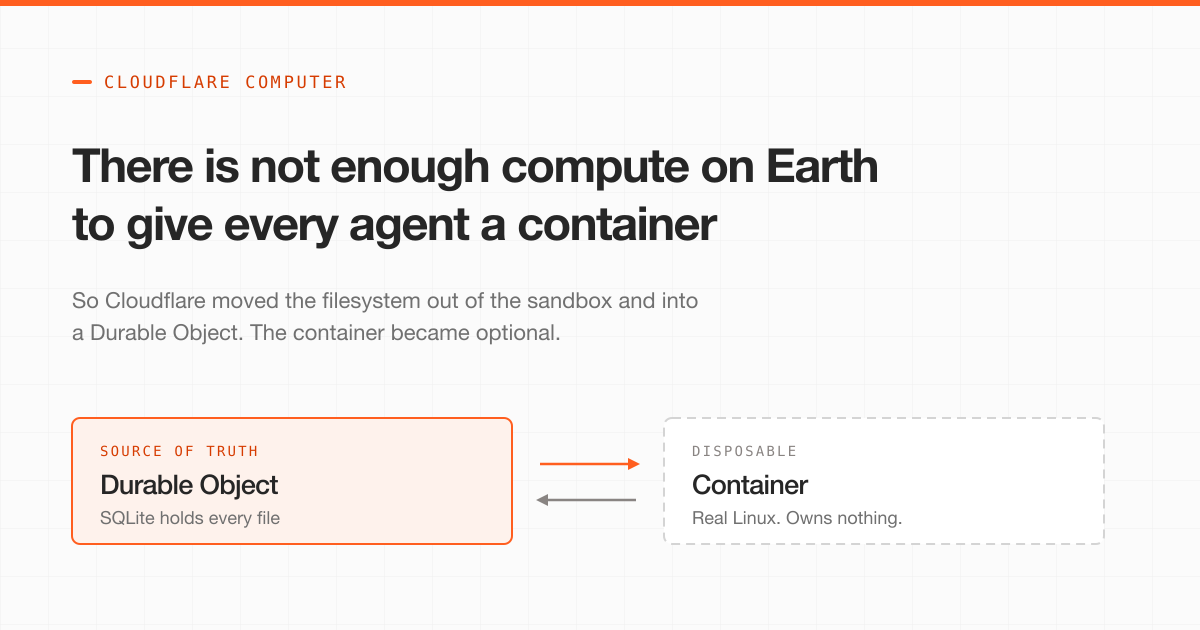
This is the direction the large platforms are taking. Cloudflare built Agent Lee directly into its dashboard, an assistant that went from giving advice to actually updating DNS records, changing SSL settings, and configuring routes on your behalf. AWS put Amazon Q inside the console, where you describe what you want and it works against the product you are already in.
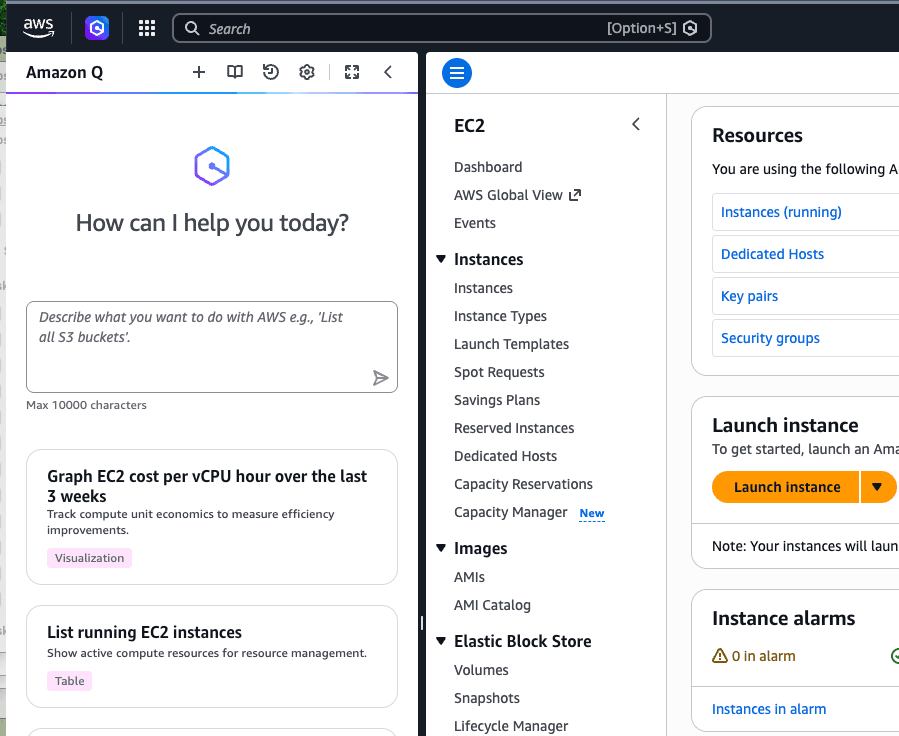
The pattern is the same everywhere: bring the help, the product, and the action into one surface.
Why this is harder than a chat bubble
This shift also makes the problem much harder, and the numbers show it. Plenty of teams have run a pilot, but only a minority have agentic AI in full production. The distance between a demo and a safe, live experience is exactly the frontend problem.
An agent that operates your product has to:
- understand the user context, not only the question
- act inside the application while respecting auth, route guards, and your existing layout
- stay brand aligned and never clobber the host app it runs inside
- hand off to a human cleanly when it reaches its limit
That last point matters more than the demos suggest. AI handling now scores very well on satisfaction. The tricky part is feeding the agent the right dose of context in real time, so it knows what the user is doing, what state the product is in, and when to hand off to a person with everything they need. The goal is not to avoid the customer. It is to resolve well, inside the product, and pass the hard cases to a human with full context.
Our approach at AGO
This is exactly what we built AGO for. Our open source SDK embeds agents into your existing frontend, React, Vue, Angular, or plain TypeScript, and lets them operate your UI: navigate your routes, highlight elements, collect and submit forms, and trigger your own functions in the browser. You keep your router, your auth, and your design. You do not build a second product next to the product.
An SDK is not the only way to let AI act on a web page. Browser extensions and WebMCP tools do it too, and each wins in a different situation. We laid out the trade offs in three ways to let AI drive a web page.
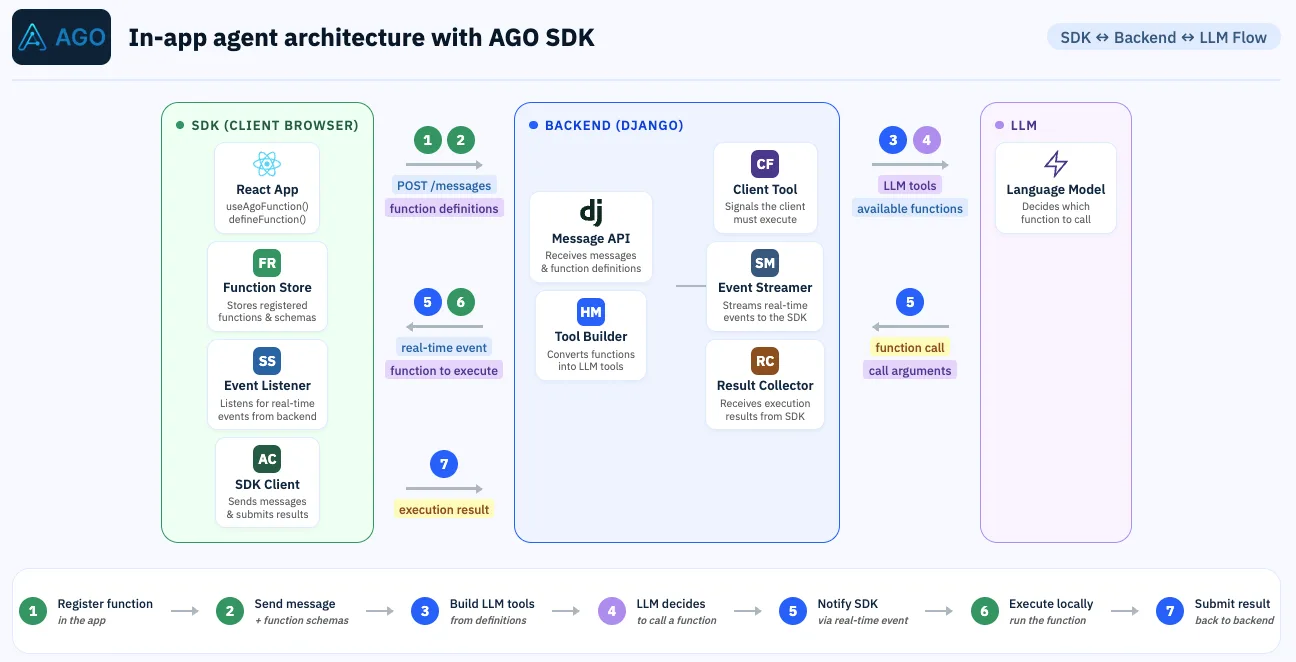
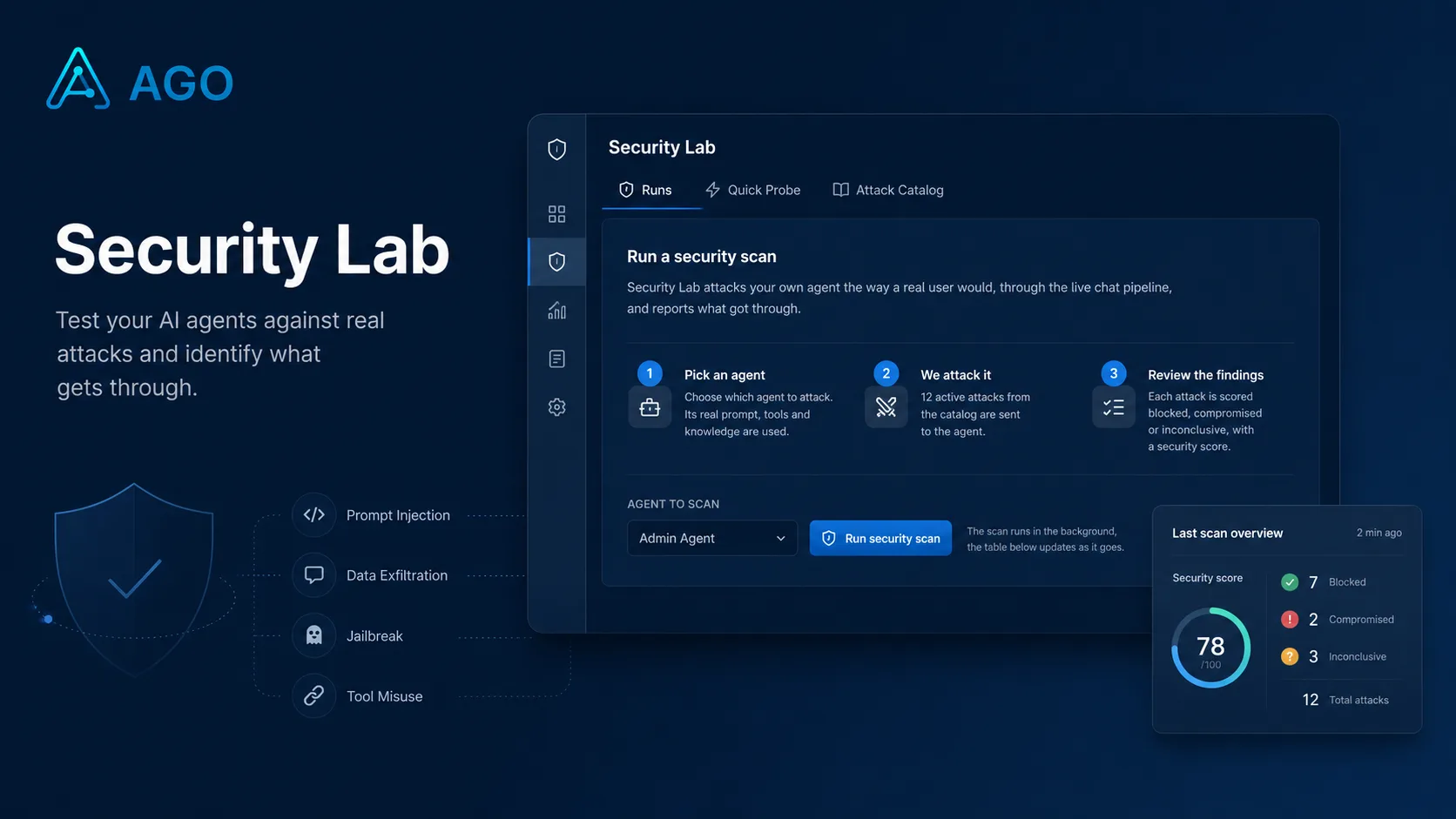
Underneath, the platform handles the parts that make a customer facing agent safe: business and user context, tool orchestration, quality monitoring, security controls, and human fallback.
Webinar: the new ways to help your customers with AI
I will go deeper on this in my next webinar, on Thursday July 9 at 11am. The session is in French.